
Before the Pencil: Why Fine Motor Development Starts Long Before Writing
Jul 14, 2026When adults think about fine motor skills, they often think about pencil grasp, coloring, cutting, or writing a child’s name. These are important skills, but they are not the beginning of fine motor development. They are the result of many earlier skills working together.
Before a child can use a pencil with control, they need a strong and stable body. They need to sit, reach, shift weight, use their shoulders, control their wrists, and coordinate both hands together. They need to understand how much pressure to use. They need to look at what their hands are doing. They need to stay with a task long enough to practice. They also need to feel safe, interested, and successful. Fine motor development is not just about the hands. It is a whole-body experience!
A child who avoids coloring may not simply dislike coloring. The task may be asking too much of their posture, hand strength, attention, or visual-motor skills. A child who presses too hard with a crayon may still be working on body awareness and pressure control. A child who switches hands may be exploring hand preference, avoiding fatigue, or having difficulty crossing midline. A child who struggles with scissors may be having trouble coordinating two hands that need to do different jobs at the same time.
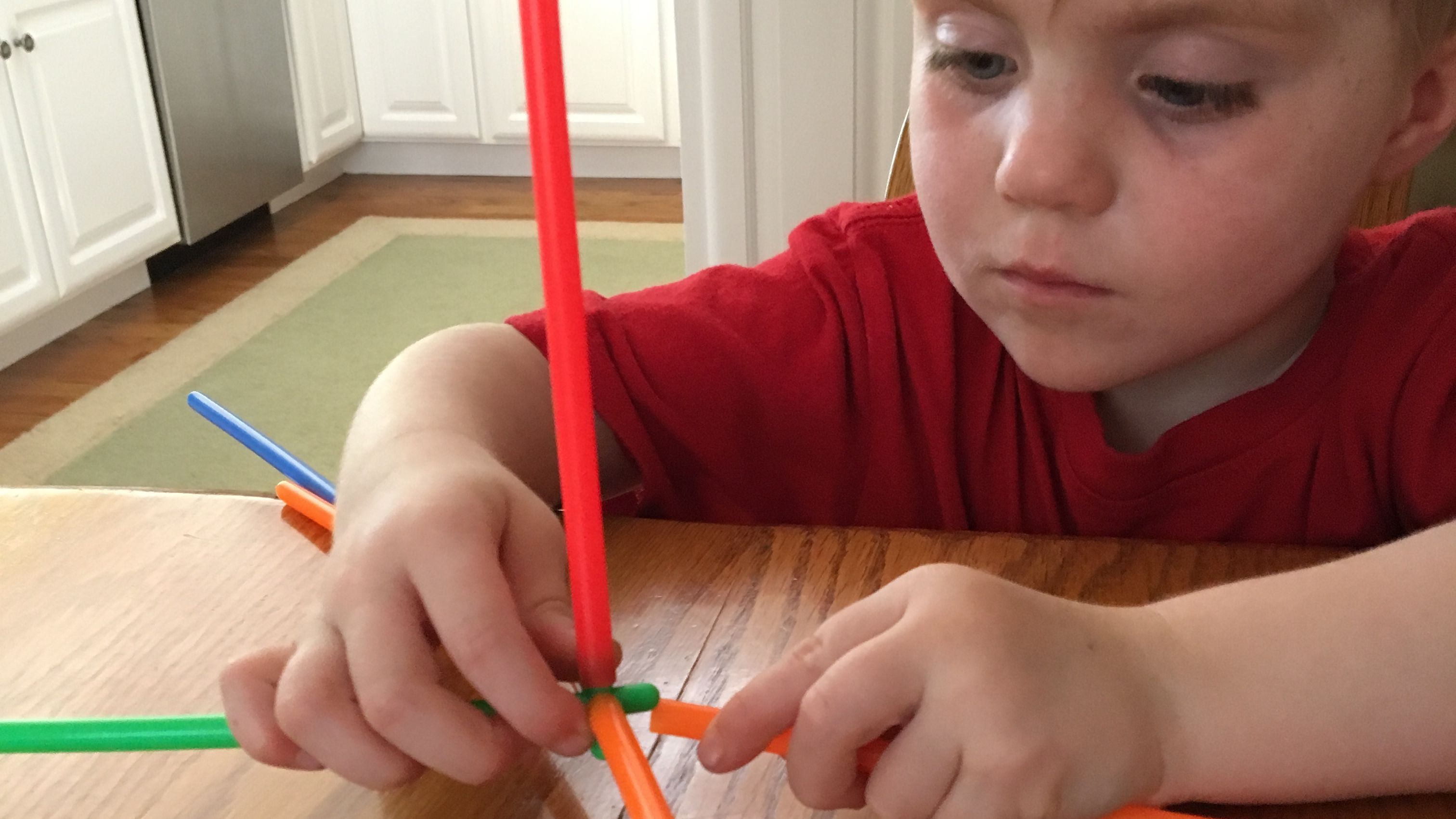
This is why preschool fine motor support should not begin with worksheets. Young children need rich, hands-on experiences that build the foundation for later writing. They need to squeeze, pinch, pull, tear, twist, build, carry, dig, climb, draw, paint, pour, and be a helper with real tasks around the classroom. These everyday activities strengthen the hands, organize the body, and give children feedback about how their movements work.
Pre-writing is also an important step before formal writing. Lines, circles, crosses, and simple shapes help children learn the motor patterns they will later use for letters. These skills can be practiced in playful ways, such as drawing with chalk, making roads for toy cars, painting with water, forming shapes in sand, or building letters with playdough.
It is also helpful to remember that fine motor development does not look the same for every child. Some children love small materials but avoid messy play. Some enjoy building but resist crayons. Some are eager to write letters before their hands are ready. Others have the physical skills but lack confidence or endurance.
Preschool is not the time to rush children into formal writing before they are ready. It is the time to build a strong foundation. When children have frequent opportunities to move, play, explore, and use their hands in meaningful ways, they develop the skills they need for future classroom tasks.
Join the Community!
Receive tips, resources, and activities to support the young children in your life!
Author

